







Road Trip Vehicle Checklist for BC Long Weekends
May 23 2026,
The Victoria Day weekend break down happens on the Coquihalla, at 4pm, in a spot with no cell service, and it is almost always something that was detectable two weeks earlier for very little money.
Long weekend trips in British Columbia are harder on a vehicle than most people account for. You load it heavier than usual, run it at sustained highway speed for hours, climb serious elevation, and then park it hot. Any marginal component gets found out. A cooling system that is fine for a Burnaby commute is not necessarily fine for the Coquihalla in May.
This road trip vehicle checklist is split by timing, because the useful thing to know is not just what to check but when checking still leaves you time to fix it.
Book any mechanical inspection two weeks before departure, check tires, fluids and wipers one week out, and verify tire pressure and load the night before. The three most common long weekend failures are tire problems, cooling system problems and battery failure, and all three are detectable in advance.
What Should You Check Two Weeks Before You Leave?
Two weeks out is the window for anything that might need a part ordered. Focus on brakes, cooling system, battery and any warning light you have been ignoring.
This timing exists for a practical reason. If an inspection turns up a worn brake component or a marginal battery, you want enough runway to order parts and get the work scheduled before the pre-holiday service rush. Booking three days before a long weekend usually means booking after it.
Be specific with the shop about the trip. A technician assessing a vehicle for a 1,200 kilometre mountain trip looks at different things than one doing a routine oil change. Mention the distance, the terrain, whether you are towing, and how heavily you will load it. Book a pre-trip inspection and say exactly where you are going.
The two-week list
- Brake pad thickness and rotor condition, especially if you will be descending long grades
- Coolant level, condition and any evidence of seepage at hose connections
- Battery load test, since heat and sustained accessory draw expose weak batteries
- Any active or intermittent warning light, diagnosed rather than cleared
- Air conditioning performance, which you will notice immediately in the Interior
What Should You Check One Week Out?
One week out, handle tires, fluids, wipers and lights. These are quick checks that need no lead time but do need to happen before you are loading the car in the dark.
Tires deserve the most attention because they cause the most trips to end early. Check tread depth across the full width of each tire, not just the middle, and look at the sidewalls for cracking, cuts or bulges. Do not forget the spare. A spare that has been sitting at half pressure for four years is not a spare.
Top up washer fluid and carry a spare jug. Highway driving through spring bug season and construction dust burns through washer fluid at a rate that surprises people, and running out at dusk on a two lane highway is genuinely dangerous.
If tread depth is marginal, replace before you go rather than after. Check tire condition and sizing and get it sorted while there is still time.
What Do You Do the Night Before?
The night before, set tire pressures cold, load the vehicle, and confirm your route conditions. Tire pressure must be set when tires are cold, which realistically means the evening before or first thing in the morning.
Loading matters more than most people think. A heavily loaded vehicle sits lower, changes weight distribution, and often calls for higher rear tire pressure. Check your door jamb placard, which frequently lists a separate pressure for full load conditions. Underinflated tires under a heavy load and sustained highway speed is the exact recipe for heat-related tire failure.
Check your route through DriveBC for construction, closures and mountain pass conditions. May weather at elevation in British Columbia is unpredictable, and passes can carry winter conditions well past the point where it feels like spring at sea level.
How Should You Actually Load the Vehicle?
Load heavy items low and forward of the rear axle, keep the load below the window line where possible, and secure everything that could become a projectile. A poorly loaded vehicle handles worse, brakes worse and consumes noticeably more fuel.
Loading rules that matter
- Heaviest items on the floor, ahead of the rear wheels. This keeps the centre of gravity low and preserves steering balance.
- Nothing loose above the seat backs. In a hard stop, an unsecured cooler behind the rear seats becomes a serious hazard to the people in front of it.
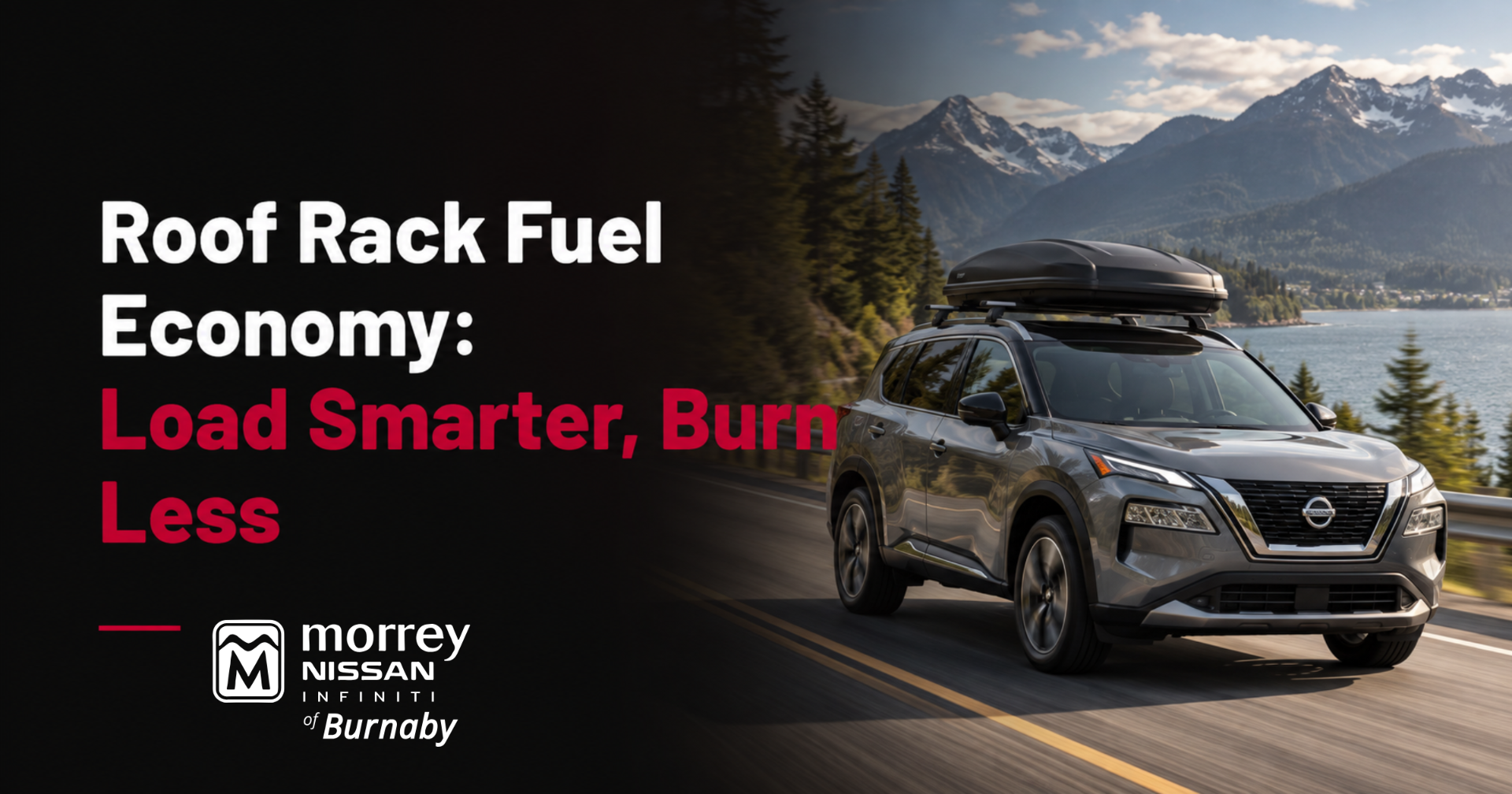
- Roof loads last and lightest. Anything on the roof raises the centre of gravity and costs real fuel economy. Bulky and light belongs up top, heavy belongs inside.
- Leave sightlines clear. If the load blocks the rear window, you are relying entirely on mirrors and cameras for the whole trip.
- Respect the load rating. Every vehicle has a maximum payload listed on the door jamb, and it includes passengers.
If you need a rack, hitch or cargo solution, pick up accessories and parts before the weekend rather than improvising with ratchet straps.
What Belongs in a BC Emergency Kit?
Carry a kit sized for the fact that parts of British Columbia have no cell coverage. The core items are a first aid kit, jumper cables or a jump pack, a flashlight, water, warm layers, and a phone power bank.
Add region-specific items for spring mountain travel: a blanket, gloves, and enough non-perishable food for the length of a realistic wait. A closure on a mountain highway can hold traffic for hours with no services in either direction. That is an inconvenience with supplies and a genuine problem without them.
Also carry the boring documents. Insurance, registration, roadside assistance contact information, and a physical note of your plate number and vehicle details. Phone batteries die and service disappears exactly when you need that information.
Before You Go
The pattern behind every item here is the same: highway distance, elevation and heavy loading expose the components that daily commuting tolerates. Nothing on this list is exotic. It is the ordinary stuff, checked at a point where finding a problem is an inconvenience rather than a ruined weekend.
Give yourself the two weeks. That single decision converts most road trip breakdowns into a routine service visit you never think about again.
Planning a trip? Talk to our service team about a pre-trip inspection built around where you are actually headed.
Frequently Asked Questions
How far in advance should I service my car before a road trip?
Book an inspection about two weeks before departure. That leaves time to order parts and schedule any repair work before the pre-holiday rush. Checking three days out often means discovering a problem you no longer have time to fix, which is worse than not checking at all.
What tire pressure should I use when the car is fully loaded?
Check the placard on the driver's door jamb, which often lists a separate higher pressure for full load conditions. Set pressures when the tires are cold, meaning the vehicle has been parked for at least three hours. Underinflation under heavy load at highway speed is a leading cause of tire failure.
Do I need winter tires for a May trip through the mountains?
Usually not, but check current conditions and posted requirements before you go. Designated British Columbia highways carry seasonal tire and chain requirements during specific months, and mountain passes can see winter conditions well outside the sea level season. DriveBC posts active restrictions and road conditions.
How much does a roof box affect fuel consumption?
A loaded roof box commonly increases highway fuel consumption by roughly 10 to 20 percent depending on shape, height and speed, because it adds significant aerodynamic drag. Removing the box when it is not in use recovers most of that. Loading inside the vehicle is always more efficient than loading on top.
What should I do if my check engine light comes on before a trip?
Have it diagnosed rather than cleared or ignored. A steady light often indicates something that can be monitored, while a flashing light generally signals an active problem that can cause damage if you keep driving. Either way, a scan takes minutes and tells you whether the trip is safe to start.