









Pothole Damage Signs Every BC Driver Should Know
April 25 2026,
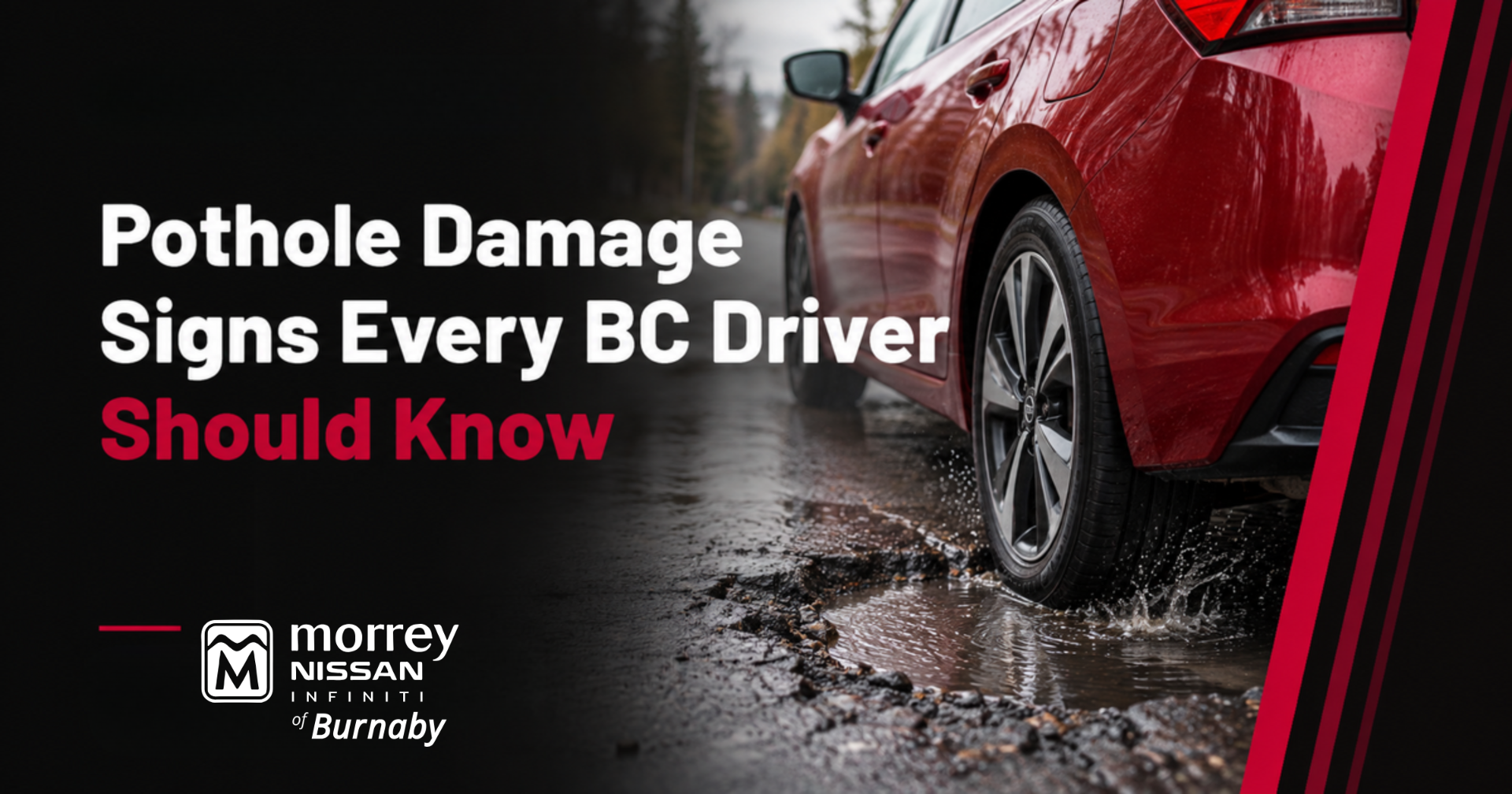
You know the sound. A hollow bang through the floor, a jolt through the steering wheel, and then nothing. The car drives away normally, you decide it was fine, and you forget about it by the next intersection.
That is the trap. The most expensive pothole damage almost never announces itself at the moment of impact. It shows up two weeks later as a tire worn down on one edge, a steering wheel that sits slightly crooked, or a vibration at highway speed that was not there in March.
Lower Mainland roads are hard on suspension for a specific reason. Freeze-thaw cycling is mild here, but constant rain works water under the asphalt and undermines it from below. The result is edges that break away into sharp-lipped holes, often full of water so you cannot judge the depth. Here is how to tell what a hit actually did.
The clearest pothole damage signs are a steering wheel that no longer sits centred, the vehicle pulling to one side, a new vibration at speed, a visible bulge in the tire sidewall, or uneven tread wear appearing within weeks. A sidewall bulge means replace the tire immediately, not eventually.
What Actually Breaks When You Hit a Pothole?
A pothole impact loads the tire, wheel and suspension in a direction they are not designed to absorb. The tire compresses to its limit, the rim edge takes the remaining force, and whatever energy is left travels into the control arms, struts and steering components.
The order of failure is predictable. Tires and rims take damage first because they meet the impact directly. Alignment shifts next, because the geometry that holds the wheel at the correct angle is adjusted in millimetres and does not need much to move. Structural suspension damage comes last and requires a harder hit, though it is more common with low-profile tires that offer less cushioning.
That sequence is why an impact that leaves no visible damage can still change alignment. The wheel does not have to bend for the angle it sits at to shift.
How Do I Know If a Pothole Knocked My Alignment Out?
The three reliable indicators are a steering wheel that sits off centre while driving straight, a consistent pull toward one side on a flat road, and uneven tire wear developing over the following weeks. Any one of them warrants an alignment check.
Test the pull properly before you conclude anything. Find a flat, straight stretch with no crown, get to a steady speed, and briefly relax your grip. Roads are deliberately crowned for drainage, so a slight drift right is normal on many surfaces. A firm, immediate pull is not.
The steering wheel test is the most useful of the three because it is unambiguous. If the wheel used to sit level and now sits five degrees off while the car tracks straight, the alignment moved. That is not a preference issue. That is a measurable change.
What Are the Warning Signs on the Tire Itself?
Inspect the sidewall for any bulge, bubble or blister, and treat one as an immediate replacement. A sidewall bulge means the internal cords have broken and the tire is being held together by rubber alone.
This is the one item on this list with no waiting period. A bulged sidewall can fail without warning at highway speed. According to the Tire and Rubber Association of Canada, sidewall damage cannot be repaired under any circumstances, unlike many tread punctures.
Other tire and wheel damage to look for
- A visible flat spot or dent on the inner or outer rim lip, best seen by turning the wheel to full lock
- Slow pressure loss in one tire over days, which often means a rim seal that no longer seats cleanly
- A new vibration that appears at a specific speed range, usually pointing to a bent wheel or thrown balance weight
- Scuffing or cuts on the sidewall shoulder from contact with the pothole edge
If you find rim damage, check tire and wheel options rather than continuing to run a wheel that will not hold a balance.
When Is It Suspension Damage Rather Than Alignment?
Suspect suspension damage when you hear a new noise over bumps, feel a loose or floating sensation, or notice the vehicle sitting visibly lower on one corner. Alignment problems change how the car tracks. Suspension damage changes how it feels.
Listen specifically for a clunk or knock when going over a speed bump at low speed, which often indicates a damaged strut mount, worn bushing or loose component. A wet or oily film on the outside of a strut body points to a blown damper. Neither of these is a drive-it-and-see situation, because a compromised suspension component changes braking and emergency handling behaviour.
If any of that describes your vehicle, have the suspension inspected rather than trying to diagnose by feel.
What Should You Do in the First 48 Hours After a Hard Hit?
Pull over when it is safe and do a visual check of both wheels on the impacted side, then monitor tire pressure daily for the next few days. Most pothole damage that will become a problem reveals itself within 48 hours.
The immediate checklist
- Look at both tires on that side for sidewall bulges, cuts or obvious deformation
- Look at both rims for dents or bright scrape marks along the lip
- Check whether the steering wheel still sits centred on your next straight stretch
- Check tire pressures the following morning when the tires are cold
- Note any new noise, vibration or pull, and where in the speed range it appears
If everything checks out and nothing changes over the next two weeks, you likely got away with it. If any single item on the list is off, get it looked at before uneven wear ruins an otherwise good tire.
The Cost of Waiting
Alignment left uncorrected will destroy a tire in a few thousand kilometres. That is the practical argument for acting early. An alignment check is a modest, quick service. A pair of tires replaced prematurely, plus the alignment you needed anyway, is several times that.
There is also a fuel and handling cost in the meantime. A vehicle fighting its own geometry uses more fuel, responds less predictably in an emergency manoeuvre, and wears steering and suspension components faster.
Hit something hard this spring? Book an inspection and we will check alignment, wheels, tires and suspension together, so you know exactly what the impact cost you and what it did not.
Frequently Asked Questions
How soon after hitting a pothole should I get an alignment check?
Within a week or two if you notice any symptom, and immediately if the steering wheel is visibly off centre or the vehicle pulls hard to one side. Waiting is what turns a simple alignment into an alignment plus new tires, because misaligned wheels scrub tread away quickly and unevenly.
Can a pothole damage my car if there is no visible damage?
Yes. Alignment angles are set in very small increments, so the geometry can shift without any bent metal or marked rim. This is the most common outcome of a hard pothole hit and the reason a car that looks fine can still be quietly wearing out a set of tires.
Is a bulge in my tire sidewall safe to drive on?
No. A sidewall bulge means the internal structural cords have broken and the tire can fail suddenly at speed. Sidewall damage cannot be repaired. Replace the tire before further driving, and use the spare or have the vehicle towed if the bulge is significant.
Why do potholes seem worse in spring?
Water penetrates cracks in the asphalt through the wet season and erodes the base layer underneath. Traffic then collapses the unsupported surface. By early spring, months of accumulated water damage break through at once, which is why holes appear rapidly and with sharp, tire-damaging edges.
Do low profile tires make pothole damage more likely?
Yes. A shorter sidewall provides less cushioning between the road surface and the rim, so more impact energy reaches the wheel and suspension. Vehicles on larger diameter wheels with low profile tires see more bent rims and more alignment disruption from the same impact than vehicles on taller sidewalls.