






Drive with Confidence: How Nissan Safety Shield Protects You on the Road
June 20 2024,
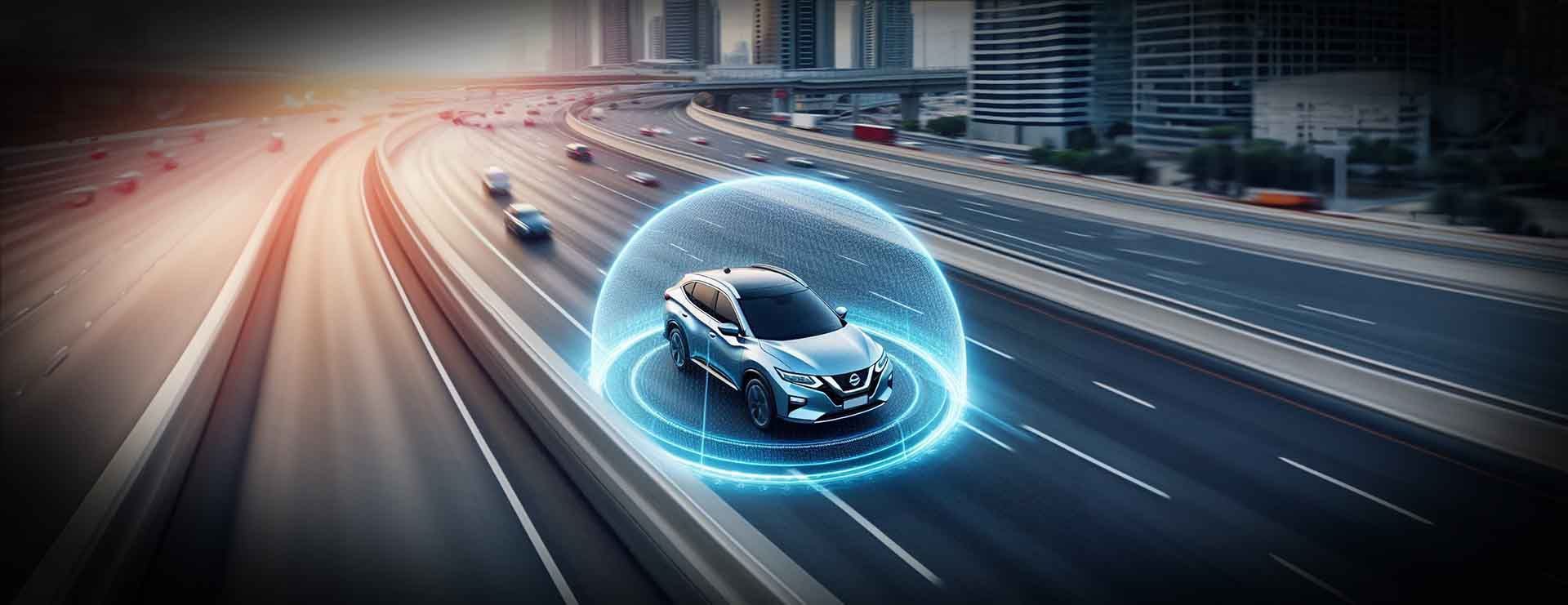
Nissan prioritizes your safety on every journey. Their comprehensive suite of safety features, known as Nissan Safety Shield® 360, utilizes a combination of cameras, radar, and sonar to create a 360-degree shield of protection for you and your loved ones. Here's how Nissan Safety Shield can give you peace of mind behind the wheel:
Nissan prioritizes your safety on every journey. Their comprehensive suite of safety features, known as Nissan Safety Shield® 360, utilizes a combination of cameras, radar, and sonar to create a 360-degree shield of protection for you and your loved ones. Here's how Nissan Safety Shield can give you peace of mind behind the wheel:
- Collision Prevention:
- Automatic Emergency Braking (AEB): This crucial feature acts as a watchful copilot. It can detect slowing or stopped vehicles ahead and warn you with a visual and audible alert. If you don't react in time, AEB can automatically apply the brakes to help reduce the severity of a potential collision or even prevent it entirely.
- Intelligent Forward Collision Warning (IFCW): Taking AEB a step further, IFCW doesn't just detect the car in front of you, it analyzes its speed and distance. This allows for earlier warnings, giving you more time to react and avoid a collision altogether.
- Lane Discipline:
- Lane Departure Warning (LDW): Ever unintentionally drift out of your lane? LDW acts as a gentle nudge, using a visual or audible alert to warn you when you're straying from your lane without using your turn signal.
- Intelligent Lane Intervention (ILI): If LDW's warning goes unnoticed, ILI can take corrective action. This system applies gentle steering pressure to guide your Nissan back into your lane, keeping you on track.
- 360-Degree Awareness:
- Rear Cross-Traffic Alert (RCTA): Backing out of a busy parking lot can be stressful. RCTA uses radar technology to detect vehicles approaching from behind your Nissan. If there's a potential collision, RCTA will warn you with a visual and audible alert, allowing you to react safely.
- Blind Spot Warning (BSW): BSW uses sensors to monitor hidden areas around your vehicle, specifically your blind spots. If a vehicle is detected in your blind spot while you have your turn signal on, BSW will warn you with a visual indicator on your side mirror and an audible chime. Some Nissan models with BSW might also provide a gentle steering nudge to help prevent a lane change collision.
- Around View® Monitor: This innovative technology provides a virtual 360-degree bird's-eye view of your surroundings on the display screen. This makes parking maneuvers and navigating tight spaces significantly easier and safer.
- Additional Features: Many Nissan models come equipped with additional safety features like Intelligent Cruise Control, which helps maintain a safe distance from the car ahead, and Driver Attention Alert, which detects signs of drowsiness and suggests a coffee break.
Remember, the most important safety feature is you. Always be alert, avoid distractions, and obey traffic laws. However, with Nissan Safety Shield watching your back, you can navigate the roads with an extra layer of confidence and protection.