







All-Season vs All-Weather vs Winter Tires: The Three-Way Comparison
September 12 2026,
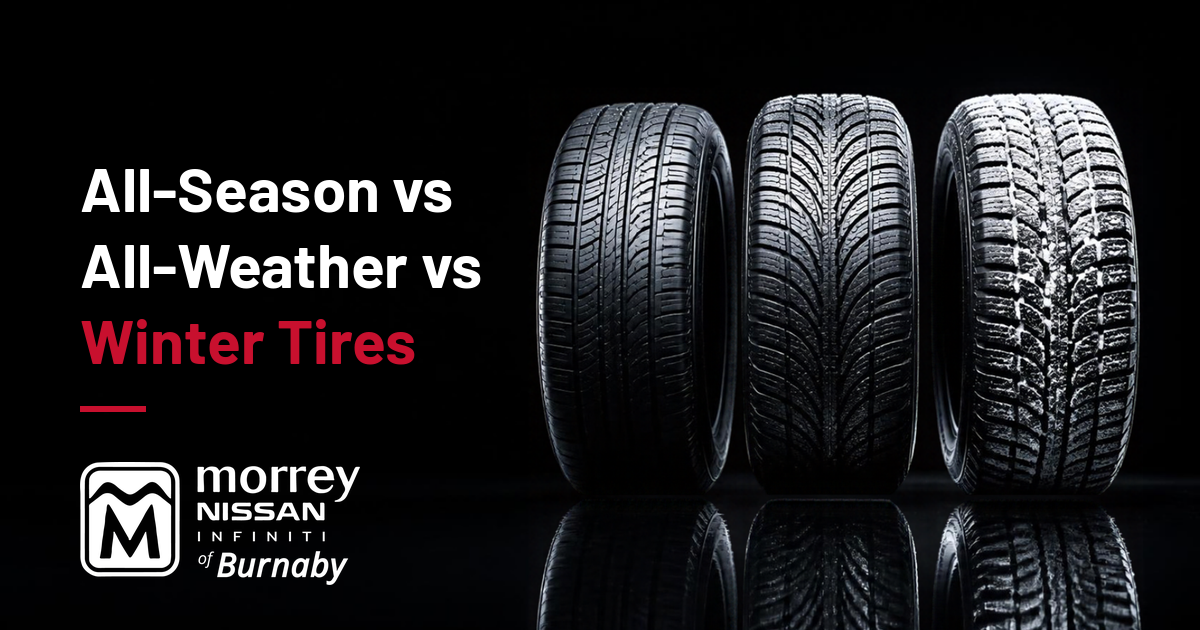
Three tire categories, two symbols on the sidewall, one legal requirement that changes by highway and by month. It is genuinely confusing, and the confusion costs British Columbia drivers money and safety every winter.
The core issue is that "all-season" is a marketing name that survived from an era when it meant something different. An all-season tire is not a winter tire. It is a three-season tire with a name that implies otherwise, and a substantial number of drivers believe they are covered when they are not.
Here is the honest three-way comparison, including what the sidewall symbols actually mean and which category suits Lower Mainland driving.
Quick Answer: All-season tires perform well above roughly seven degrees Celsius and lose grip below it. All-weather tires carry the mountain snowflake symbol and can be run year round with a modest compromise in each season. Winter tires deliver the best cold and snow performance and wear quickly in warm weather. For most Lower Mainland drivers, all-weather tires are the practical single-set answer.
What Do the Sidewall Symbols Actually Mean?
Two markings matter. The M+S symbol indicates a mud and snow tread pattern with no tested performance requirement. The three-peak mountain snowflake symbol indicates the tire passed a defined snow traction test.
This difference is the most important thing in this article. M+S is essentially a tread pattern description, and it is stamped on most all-season tires. The mountain snowflake is an earned certification based on measured performance in snow.
Both symbols currently satisfy British Columbia's designated winter tire requirements on posted highways, but they do not represent equivalent capability. The Tire and Rubber Association of Canada maintains guidance on tire markings and their meaning, and it is worth understanding the distinction before assuming your all-seasons are winter tires.
What Are All-Season Tires Actually Good At?
All-season tires are optimized for warm and moderate conditions, offering long tread life, low noise, good wet grip above about seven degrees Celsius, and good fuel efficiency. Below that temperature, the rubber compound stiffens and grip drops noticeably.
That seven degree threshold is the key number, and it is about temperature rather than snow. An all-season tire on a dry five degree morning in Burnaby is already performing below its potential. Drivers assume the compromise only applies when there is snow on the ground, which is why the risk goes unrecognized.
Best for: drivers who genuinely do not drive in cold conditions, or who own a dedicated second set of winter tires and want maximum warm weather performance from their summer set.
What Are All-Weather Tires, and Are They a Real Category?
All-weather tires are a genuine category, not marketing. They carry the three-peak mountain snowflake certification while remaining suitable for year-round use, using compounds and tread designs that bridge the gap between all-season and winter.
They are the fastest-growing category in Canada for good reason. For a driver who does not want to store, swap and pay for two sets of tires, an all-weather tire delivers certified snow capability year round in one set.
The compromise is real but modest for this region. All-weather tires wear somewhat faster than all-seasons in summer heat, are slightly noisier, and do not match a dedicated winter tire in deep snow or on ice. In the Lower Mainland, where truly severe conditions are occasional rather than routine, that trade is favourable for most drivers.
Best for: Lower Mainland drivers who want one set of tires, occasional mountain trips, and certified winter capability without a seasonal changeover.
What Do Winter Tires Do That the Others Cannot?
Winter tires use a softer compound that stays flexible in cold, plus aggressive siping that creates thousands of biting edges. The result is substantially shorter stopping distances on cold, snowy and icy surfaces than any other category can achieve.
The performance gap is largest exactly where it matters most: braking and cornering on ice and packed snow. This is the argument that overrides everything else for drivers who face those conditions regularly, because acceleration traction is easy to compensate for and stopping distance is not.
The cost is warm weather behaviour. Winter tire compound wears rapidly above about seven degrees, handling becomes vague, and braking distances on warm dry pavement lengthen. Leaving winter tires on through summer wastes an expensive set of tires and reduces warm weather safety.
Best for: drivers who commute over mountain passes, live on steep grades, or regularly travel to the Interior or ski areas between November and March.
Which Should a Lower Mainland Driver Choose?
For most people in Burnaby, Vancouver and the surrounding area, all-weather tires are the best single-set choice. For drivers who regularly leave the Lower Mainland in winter, two sets with dedicated winter tires remains the stronger option.
Decide by your actual driving
- City commuting only, rarely leaves the region: all-weather tires, one set, done
- Regular mountain or Interior travel November to March: dedicated winter set plus a summer or all-season set
- Lives on a steep grade in Burnaby, Coquitlam or the North Shore: dedicated winter set, since the difference on an icy hill is significant
- Drives very little in winter and stores the vehicle: all-season is defensible, though all-weather removes the decision entirely
- New driver or nervous in poor conditions: winter tires, because the confidence and margin are worth more than the cost
Whichever you choose, replace all four. Mixing tire types across axles produces unpredictable handling, and on all wheel drive vehicles it can also stress the drivetrain.
When Should You Switch, and What About the Law?
Switch to winter or all-weather tires when daytime temperatures consistently drop below about seven degrees Celsius, which in the Lower Mainland is typically sometime in October or early November.
British Columbia requires winter tires marked with either M+S or the mountain snowflake symbol on designated highways during posted months, which generally run from early October through the end of March, extending later on some mountain routes. The requirement applies to the highway you are on, not your home address, so a Vancouver driver heading to Whistler or the Interior is subject to it.
Book early. The first genuinely cold week produces a queue at every shop in the region, and the drivers who booked in September get the appointment they wanted. Book a tire changeover or shop the online tire store to check sizing and availability first.
Getting It Right
The single most common mistake is assuming all-season tires are adequate for winter because the name implies year-round capability. They are not, and the temperature at which they lose performance is higher than most drivers realize.
Whether you choose all-weather or a dedicated winter set, make sure the tires carry the three-peak mountain snowflake symbol. That certification is the only marking that reflects tested snow performance rather than tread appearance.
Not sure what fits your vehicle and your driving? Talk to our service department or order wheels and tire accessories if you are setting up a second set on dedicated rims.
Frequently Asked Questions
Are all-season tires legal for winter driving in BC?
All-season tires marked M+S currently satisfy British Columbia's designated highway winter tire requirements, provided they have adequate tread depth. However, legal compliance and actual capability are different things. All-season compound stiffens below roughly seven degrees Celsius, so a legal tire can still perform poorly in cold conditions.
What does the three-peak mountain snowflake symbol mean?
It indicates the tire has passed a standardized snow traction test, unlike the M+S marking, which only describes a tread pattern with no performance requirement. Both winter tires and all-weather tires carry the mountain snowflake. It is the most reliable single indicator of tested cold weather capability on a sidewall.
Are all-weather tires good enough for the Lower Mainland?
For most drivers, yes. All-weather tires carry certified snow capability, can be run year round without a seasonal changeover, and handle the conditions typical of Burnaby and Vancouver well. Drivers who regularly cross mountain passes or live on steep grades still benefit meaningfully from dedicated winter tires.
Can I leave winter tires on all year?
You can, but you should not. Winter tire compound wears rapidly in warm temperatures, which shortens the life of an expensive set, and handling and braking on warm dry pavement are worse than with an appropriate tire. If you want one year-round set, all-weather tires are the correct choice.
When should I switch to winter tires in Vancouver?
When daytime temperatures consistently fall below about seven degrees Celsius, which in the Lower Mainland typically means October or early November. Book the appointment before the first cold snap, since demand spikes sharply and appointment availability disappears quickly once temperatures drop.