







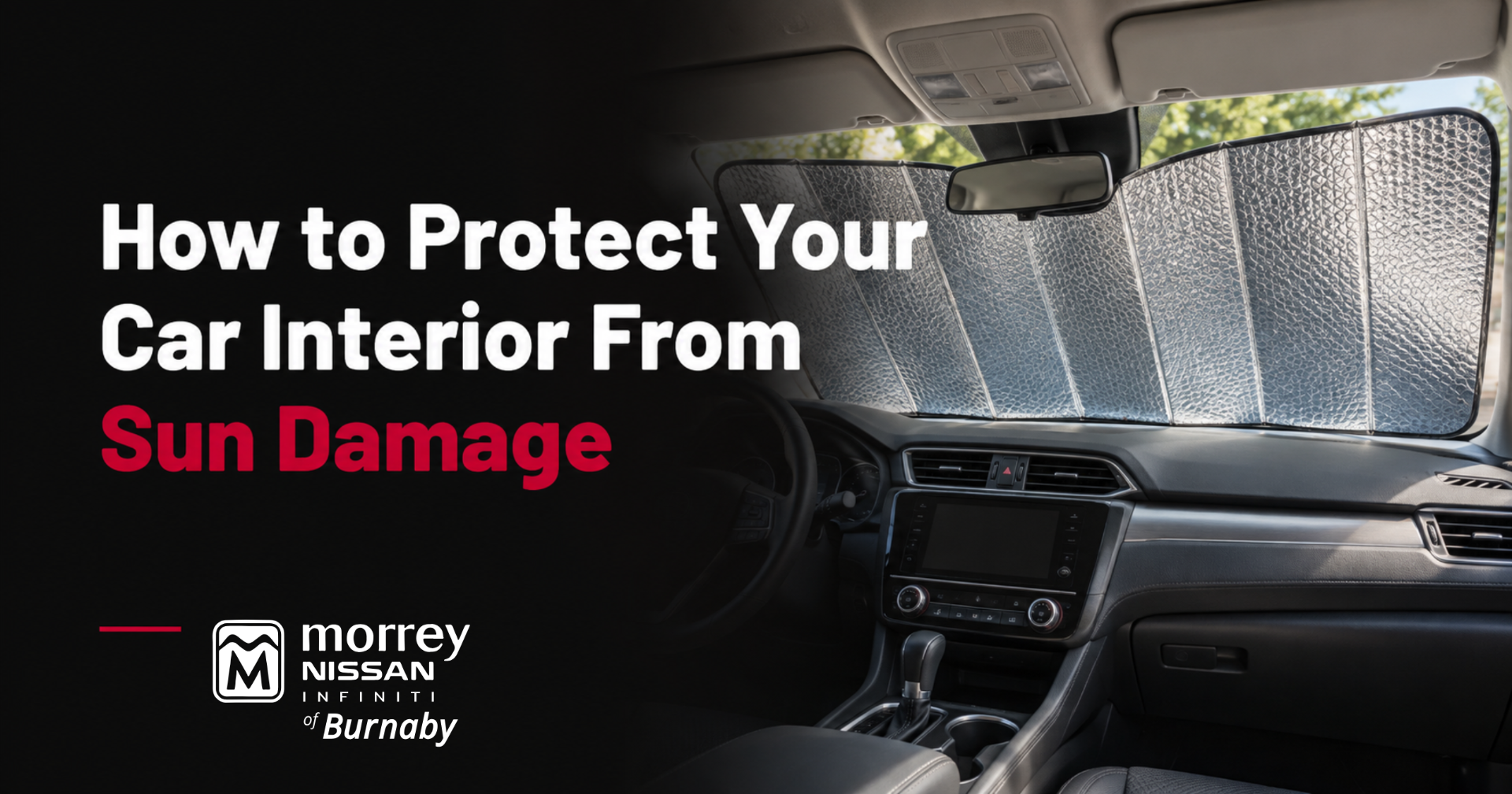
How to Protect Your Car Interior From Sun Damage
June 20 2026,
Vancouver has a reputation for rain that quietly costs people money. Because we spend eight months under cloud, nobody here thinks of sun damage as a local problem, so nobody prepares for the four months when it absolutely is.
Then a vehicle spends three summers parked outside facing south, and the dash top develops a chalky haze, the driver's seat bolster cracks, and the infotainment screen picks up a permanent dull cast. None of that reverses. Interior UV damage is cumulative and effectively permanent, which makes prevention the only meaningful strategy.
Here is what summer sun actually does to a vehicle interior, and the small number of habits that genuinely prevent it.
Ultraviolet light breaks down the polymers in dashboards, seats and trim, while trapped heat accelerates the process and dries out leather and adhesives. The three most effective protections are a reflective windshield sunshade, parking orientation, and cleaning surfaces with a UV-protectant product rather than a shine product.
What Does Sun Actually Do to a Car Interior?
Ultraviolet radiation breaks the chemical bonds in plastics, vinyl, leather and fabric, while heat accelerates that breakdown and drives moisture out of materials. The visible result is fading, chalking, hardening and eventually cracking.
The dash top takes the worst of it because it faces almost directly upward through raked glass. Interior temperatures on a parked vehicle in direct sun routinely exceed 60 degrees Celsius, and dash surfaces themselves get considerably hotter than the cabin air. That combination of high heat and direct UV is the harshest environment anywhere in the vehicle.
Leather and leatherette suffer through a different mechanism. Heat drives the plasticizers and oils out of the material, so it loses flexibility, and then normal use cracks the now-brittle surface. Once a crack forms it propagates. The seat bolster on the driver's side is almost always first, because it takes friction every time someone gets in.
Does a Windshield Sunshade Actually Help?
Yes, more than any other single measure. A reflective sunshade blocks direct UV on the dash and reduces peak interior temperature substantially, which addresses both damage mechanisms at once.
The practical objection is that people find them annoying to use. That is fair, and it is why the accordion-style shades that take three seconds to deploy tend to get used while the ones requiring careful folding end up in the trunk. The best sunshade is the one you will actually put up.
Coverage matters too. The windshield is the priority because of its area and angle, but on long parks the side windows contribute meaningfully, particularly to seat and door panel fading on whichever side faces the sun.
Where You Park Matters More Than You Think
Parking orientation and shade choice have a larger cumulative effect than any product. Over years, a vehicle parked nose-north in a carport ages dramatically better than an identical vehicle parked facing south in an open lot.
Practical parking habits
- Choose shade even if it costs a walk. Five extra minutes of walking beats years of dash degradation.
- Point the windshield away from the afternoon sun. Afternoon sun is hotter and lower, which drives it deeper into the cabin.
- Prefer covered parking for long parks. Airport and long-term parking is where the most damage accumulates in a single stretch.
- Watch for tree sap and bird activity. Shade under certain trees trades UV damage for exterior finish damage, so pick the tree carefully.
- Crack windows slightly when it is safe. Venting reduces trapped heat considerably, though only where security allows.
What Should You Use to Clean and Protect Surfaces?
Use a UV-protectant interior product rather than a gloss or shine product. Many high-gloss dressings contain solvents that soften plastics over time and leave a reflective surface that creates windshield glare.
Look for products labelled with UV protection and a matte or satin finish. Apply them to a clean, dry surface, because applying protectant over dust simply seals the grit against the material. For leather, use a dedicated leather cleaner followed by a conditioner, since general-purpose interior cleaners can strip the finish.
There is a safety dimension as well. A glossy dash reflects into the windshield in low sun conditions, which is exactly when glare is already worst. ICBC identifies glare as a contributing factor in collisions, and a matte dash finish is a small, free improvement.
Frequency matters more than product choice. A protectant applied every two months through summer does far more than a premium product applied once a year.
What About Window Tint and Screens?
Window film blocks a large share of ultraviolet light and reduces heat load, but front side window darkness is regulated in British Columbia. Confirm current provincial rules before having film applied to the front side glass or windshield.
Clear or light UV-blocking films are available that protect against ultraviolet without significantly changing visible light transmission, which sidesteps the regulatory question entirely. These are often the sensible choice for someone whose concern is interior preservation rather than appearance or privacy.
Modern infotainment screens deserve specific attention. Extended direct sun exposure can cause discolouration and, in extreme heat, affect adhesive layers and polarizing films. A sunshade protects the screen along with everything else, which is one more reason it is the highest-value item on this list.
Why This Matters at Trade-In
Interior condition is one of the first things assessed on any appraisal, and sun damage is impossible to hide. A cracked dash or faded, hardened seats visibly ages a vehicle beyond its kilometres and directly reduces what it is worth.
This is the part owners tend to discover too late. Mechanical condition can be corrected with service records and repairs. A UV-degraded interior cannot be restored, only replaced, and replacement cost usually exceeds the value it recovers.
Curious where your vehicle stands? Find out what your vehicle is worth, or browse certified pre-owned to see how well-kept interiors hold value. If you want to set your current vehicle up properly for the season, shop interior protection accessories or ask our service team about interior care.
Frequently Asked Questions
Does sun damage really happen in Vancouver?
Yes. Vancouver receives strong summer sun from roughly May through September, and UV exposure accumulates. Because the region is known for rain, owners tend to skip protection entirely, which means Lower Mainland vehicles often show more interior sun damage than owners expect. Damage is cumulative and does not reverse.
Are windshield sunshades worth using?
Yes. A reflective sunshade is the single most effective interior protection measure available. It blocks direct ultraviolet exposure on the dash and substantially lowers peak cabin temperature, addressing both causes of interior degradation. Choose a style you can deploy in a few seconds, because consistency matters more than the specific product.
What is the best product for protecting a dashboard?
A UV-protectant interior dressing with a matte or satin finish. Avoid high-gloss products, which often contain solvents that soften plastic over time and create windshield glare. Clean the surface first, since applying protectant over dust traps grit against the material. Reapply every couple of months during summer.
Does window tint stop interior fading?
Quality window film blocks the majority of ultraviolet light and reduces heat load, which significantly slows interior fading. British Columbia regulates how dark front side windows may be, so confirm current rules before applying film there. Clear UV-blocking films offer protection without changing visible darkness.
How does interior condition affect trade-in value?
Considerably. Interior condition is assessed early in any appraisal, and sun damage such as a cracked dash, faded trim or hardened seats is immediately visible and cannot be repaired cost-effectively. A well-preserved interior signals careful ownership overall, which supports both the appraised value and buyer confidence.