







Crossover vs Sedan vs Hatchback: Which Fits Your Commute?
July 11 2026,
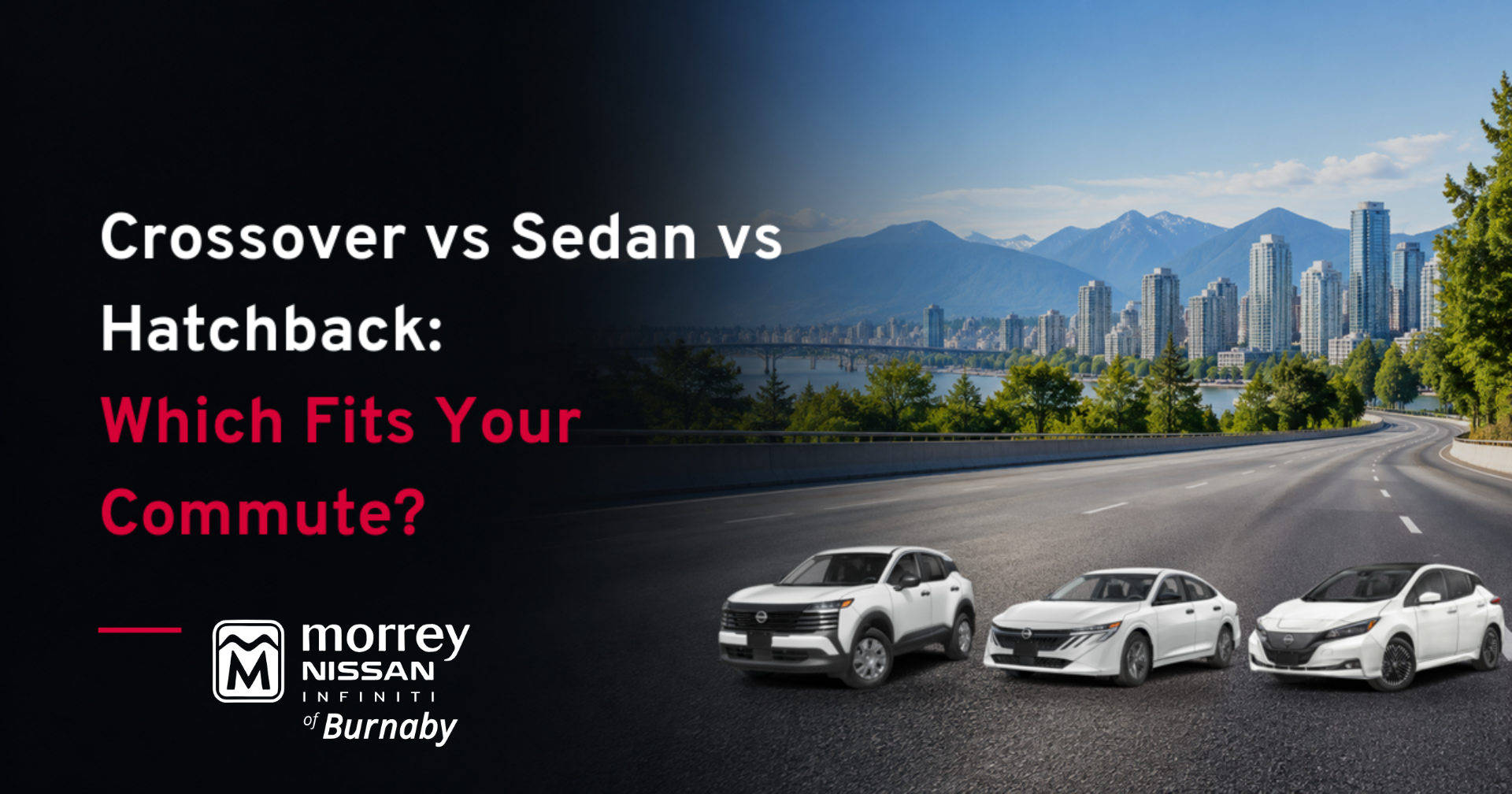
The crossover won. That is just the market reality. Sedans and hatchbacks have been steadily squeezed out of driveways across the Lower Mainland, and most buyers now start their search assuming a crossover without ever asking whether it is the right shape for how they drive.
Sometimes it is. Often it is not. And the reasons have almost nothing to do with the reasons people give.
A Vancouver commute has a distinctive profile: short distances, heavy congestion, tight and often old parking infrastructure, steep grades, and rain for a large share of the year. Those conditions reward some body styles and punish others in ways that a highway-focused comparison completely misses.
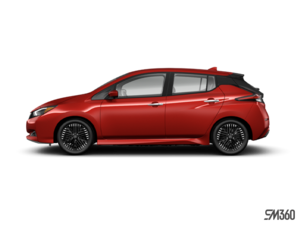
Quick Answer: Hatchbacks offer the best combination of cargo flexibility and urban footprint. Sedans deliver the best fuel economy, quietest cabin and lowest centre of gravity. Crossovers offer the best visibility, easiest entry and highest ground clearance. For a congested urban commute with occasional cargo needs, the hatchback is the most underrated choice.
What Actually Separates These Three Body Styles?
The core difference is the shape of the rear and the height of the floor. A sedan has a separate sealed trunk, a hatchback has a full-height rear opening into the cabin, and a crossover is essentially a taller hatchback with more ground clearance and often available all wheel drive.
That description sounds reductive, but it explains almost every practical difference that follows. The sealed trunk on a sedan gives quieter cabins and better security but limits what you can carry. The full-height opening on a hatchback or crossover lets you load tall objects but connects the cargo area acoustically to the cabin.
Height explains the rest. A crossover's raised floor delivers a commanding view and easier entry, and costs you fuel economy, cornering composure and parkade clearance. There is no free lunch in any of it.
Which Body Style Is Best for City Driving and Parking?
Hatchbacks and small sedans are easiest to park, while crossovers are the hardest despite often being no longer. The deciding factors are overall height, turning circle and how well you can judge the vehicle's corners.
Height is the one people forget until it stops them. Many older Vancouver and Burnaby parkades post clearance limits under two metres, and roof rails or a raised suspension can put a crossover uncomfortably close. Anyone who has reversed out of a parkade entrance in front of a queue of traffic has learned this the expensive way.
Turning circle is the other daily factor. Shorter vehicles with shorter wheelbases turn tighter, which matters enormously in multi-level parkades with narrow ramp turns and in the three-point turns that residential Vancouver streets demand.
Which One Carries More, and Does the Number Tell the Truth?
Hatchbacks and crossovers carry far more usable cargo than sedans, and cargo volume figures understate the difference. A sedan's trunk opening physically limits what fits regardless of how many litres the brochure claims.
Consider what you actually carry. A flat-pack furniture box, a bicycle with the front wheel off, a dog crate, a stack of moving boxes, a Christmas tree. None of those care about litres. They care about whether there is a rectangular opening tall enough to accept them.
The cargo reality check
- Sedan: excellent for luggage, groceries and anything that fits through a trunk lid opening. Poor for anything tall or awkward.
- Hatchback: genuinely versatile. Seats down, a small hatchback swallows objects that defeat a much larger sedan.
- Crossover: similar shape advantages to a hatchback with more volume and a higher load lip, which is easier for heavy items and harder for sliding long items in.
If the shape of what you carry matters more than the volume, compare body styles across the lineup and open the rear of each one in person.
What Does Each Body Style Cost You in Fuel?
Sedans are typically the most efficient, hatchbacks close behind, and crossovers noticeably less efficient because of added weight, height and frontal area. Expect a gap of roughly 1 to 2 litres per 100 kilometres between a sedan and a comparable crossover.
City driving widens the gap. Stop-and-go traffic penalizes weight heavily, because every acceleration from a stop has to move that additional mass. A Vancouver commuter sitting in Kingsway traffic experiences the efficiency difference far more than a highway commuter does.
Official ratings for every vehicle sold in Canada are published through the Natural Resources Canada Fuel Consumption Ratings tool, which is the right place to compare specific models rather than relying on class generalizations.
Does the Higher Seating Position of a Crossover Actually Help?
Yes for forward visibility and ease of entry, and less than people assume for overall safety awareness. A higher seating position improves your view over traffic, but modern crossovers also carry thicker pillars and higher belt lines that create larger blind spots.
Ease of entry is the genuinely underrated benefit and the reason many buyers never go back. Sliding across into a seat at roughly hip height is meaningfully easier than lowering yourself into a sedan, particularly for older drivers, anyone with knee or back issues, and parents loading children into car seats every day.
The tradeoff is dynamic. A higher centre of gravity means more body roll and generally longer emergency handling responses. Modern stability systems manage this well, and a crossover is not unsafe, but the laws of physics still apply on a wet off-ramp.
Which Should You Actually Choose?
Choose a hatchback if you want maximum practicality per square metre of parking space. Choose a sedan if efficiency, ride quietness and driving composure matter most. Choose a crossover if entry height, visibility, all wheel drive availability or ground clearance are genuine daily needs.
The honest advice for most Lower Mainland commuters is to test drive a hatchback before defaulting to a crossover. Buyers who assume they need the bigger vehicle are frequently surprised at how much a modern hatchback carries, how much less it costs to run, and how much easier it is to live with in the parking situations this city actually presents.
Ready to compare? Browse pre-owned options, see vehicles under $25,000, or start shopping online and narrow it down before you visit.
Frequently Asked Questions
Is a hatchback big enough to replace an SUV?
For many people, yes. A hatchback with the rear seats folded offers a large, flat, easily accessible cargo area that handles most household and recreational loads. What it does not offer is towing capacity, ground clearance or the entry height of an SUV. If those three are not requirements, a hatchback usually does the job in a smaller footprint.
Do sedans get better fuel economy than crossovers?
Generally yes, by roughly 1 to 2 litres per 100 kilometres for comparable powertrains. Sedans are lighter, lower and more aerodynamic, which reduces both rolling and air resistance. The difference is largest in city driving, where weight matters most, and narrows somewhat at steady highway speed.
Are crossovers safer than sedans?
Not automatically. Crossovers sit higher and are often heavier, which helps in some collision scenarios, but they also carry a higher centre of gravity and can have larger blind spots. Modern vehicles of all body styles carry comparable safety technology. Safety ratings and driver assistance features matter more than body style alone.
Which body style is easiest to park in Vancouver?
Small hatchbacks and compact sedans, because of shorter overall length, tighter turning circles and lower height. Height matters specifically in older parkades with posted clearance limits, where roof rails or a raised suspension can create problems. Measure your regular parking space before committing to a taller or longer vehicle.
Why are there fewer sedans and hatchbacks available now?
Consumer demand shifted strongly toward crossovers and SUVs over the past decade, so manufacturers reallocated production accordingly. That means less new selection, but it also means the remaining sedans and hatchbacks are often well-developed and represent strong value on the used market for buyers who prefer them.