








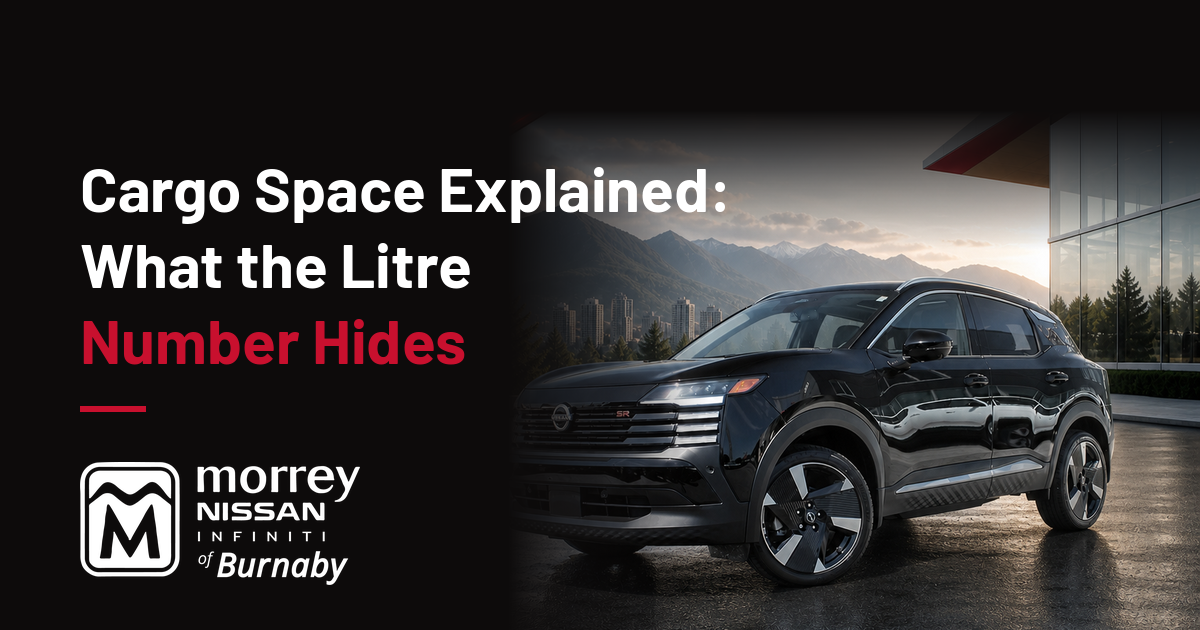
Cargo Space Explained: Why Litres Matter Less Than the Photo
August 22 2026,
Two vehicles sit side by side. One lists 640 litres of cargo space, the other 590. The buyer picks the bigger number, then discovers three weeks later that the stroller only fits in the smaller one.
Cargo volume figures are technically accurate and practically misleading. They measure total enclosed space, including corners, curves and cavities that no real object will ever occupy. What determines whether your gear fits is not volume. It is shape, opening dimensions and load height.
Here is how to read cargo space properly, and the five measurements that predict real-world usefulness far better than any litre figure.
Quick Answer: Cargo volume in litres measures total enclosed space, including irregular areas that cannot hold usable items. What actually determines fit is the height of the load lip, the width between the rear wheel arches, the height of the opening, the depth with seats up, and whether the seats fold genuinely flat. Measure those five and ignore the headline number.
Why Is the Litre Figure Misleading?
The litre figure measures total enclosed volume, not usable rectangular space. Manufacturers calculate it by filling the area, including tapered corners, wheel arch recesses and under-floor cavities that cannot accept a box.
Different manufacturers also measure to different points. Some measure to the roof, some to the parcel shelf, some to the window line. Some include under-floor storage, some do not. Two vehicles quoting the same number can offer genuinely different practical capacity depending on how each was measured.
The shape penalty is real. A vehicle with a steeply raked rear window may have generous volume on paper while offering very little height at the back of the load area, which is exactly where you would want to place a tall box.
What Are the Five Measurements That Actually Matter?
Load lip height, width between the wheel arches, opening height, depth behind the rear seats, and the quality of the seat fold. These five predict what fits far better than volume does.
1. Load lip height
This is the height from the ground to the bottom edge of the cargo opening. It determines how much you have to lift anything heavy. A low lip is a genuine daily convenience for groceries, luggage and dog crates. Crossovers and SUVs usually have higher lips than hatchbacks and wagons, which is a real ergonomic cost of ride height.
2. Width between the rear wheel arches
The narrowest point of the cargo floor, and the measurement that determines whether flat items like plywood, flat-pack furniture or a folded playpen lie down properly. It is rarely published, which is exactly why it is worth measuring yourself with a tape.
3. Opening height
The vertical clearance at the hatch. A tall opening lets you slide in bulky items without tilting them, which matters for anything rigid. This is where sloped-roof crossovers lose to boxier designs despite similar volume figures.
4. Depth behind the rear seats
Usable depth with the seats up, which is the configuration you use most days. Many vehicles offer impressive maximum volume with seats folded and modest space in daily use.
5. Seat fold quality
Whether the seats fold genuinely flat or leave a step or ramp. A true flat fold lets long items slide in. A stepped fold means anything long sits at an angle, wasting the height you paid for.
How Do You Test Cargo Space Properly?
Bring your actual gear to the test drive. A stroller, a hockey bag, a dog crate, a set of golf clubs, whatever you carry regularly. Ten minutes of loading in the lot tells you more than any specification comparison.
This sounds obvious and almost nobody does it. Shoppers will spend two hours reading comparison articles and then evaluate cargo space by looking at an empty trunk for thirty seconds. The empty trunk always looks fine.
If you cannot bring gear, bring a tape measure and the dimensions of what you carry. Write them down in advance: stroller folded, largest suitcase, dog crate. Then measure the five items above on each vehicle. It takes minutes and it is decisive.
To compare published specifications first and shortlist, compare cargo specifications across models or review model details through Nissan Canada before you visit.
What Features Make Cargo Space More Usable?
Adjustable load floors, split-folding rear seats, underfloor storage and a low flat floor add far more practical capacity than extra litres do.
A dual-height load floor is one of the most useful features available, because it lets you raise the floor level with the load lip to create a genuinely flat surface, or drop it to gain depth. A 60/40 or 40/20/40 split rear seat lets you carry long items while still seating passengers, which is the single most common real-world cargo requirement.
Small things matter too. Tie-down points that are actually placed where you would secure something. A cargo cover that stores somewhere rather than needing to be left at home. A 12-volt outlet in the cargo area. Hooks for grocery bags.
To set your cargo area up properly, shop cargo organizers and liners, which do more for daily usability than most people expect.
The Practical Takeaway
Volume tells you roughly what class of vehicle you are looking at. Everything past that is shape, and shape is what determines whether your specific gear fits.
Use the litre figure to build a shortlist, then evaluate the shortlist with a tape measure and your own equipment. Buyers who do this consistently end up with vehicles that feel bigger than their specifications suggest, because the space is arranged for how they actually use it.
Ready to test it with your own gear? See current new inventory or start shopping online to shortlist first, then bring the stroller.
Frequently Asked Questions
Why do two cars with the same cargo litres fit different amounts?
Because volume measures total enclosed space including corners, wheel arch recesses and tapered areas that cannot hold a box. Shape determines usable capacity. A vehicle with a boxy cargo area and a flat floor will accept more real objects than one with the same volume arranged around a sloped rear window.
What is a load lip and why does it matter?
The load lip is the bottom edge of the cargo opening, and its height off the ground determines how far you must lift items to load them. A low lip makes groceries, luggage, pets and heavy boxes noticeably easier to handle. It is one of the most significant daily ergonomic differences between body styles.
Do folding rear seats really need to fold flat?
For carrying long items, yes. A fold that leaves a step or an angled ramp means anything long rests at a slope, which wastes vertical space and lets items slide. A genuinely flat fold creates a continuous load floor from the hatch to the front seat backs, which is far more usable.
How should I measure cargo space when shopping?
Measure five things: height from the ground to the load lip, width between the rear wheel arches, height of the hatch opening, depth behind the raised rear seats, and whether the seats fold flat. Bring the dimensions of the items you carry most often, or bring the items themselves.
Is a wagon or hatchback better than an SUV for cargo?
Often, for practical loading. Wagons and hatchbacks typically have lower load lips and flatter floors, which makes loading easier and improves the usability of the space they have. SUVs offer more total volume and greater height. Which is better depends on whether your loads are heavy and low or tall and bulky.