








Is It Time to Switch Tires? Here's What BC Drivers Need to Know This Spring
March 14 2026,
When Should You Switch From Winter Tires? What BC Drivers Need to Know This Spring
Spring is arriving in Metro Vancouver, which means the annual question is back: when exactly do you take off the winter tires? Get the timing wrong in either direction, and you're either wearing out good rubber or running unfit tires through the warmer months. Here's what actually matters.
What Temperature Should Trigger the Switch?
The number to know is 7°C. Winter tires are built with a soft rubber compound designed to stay pliable in cold conditions, but once temperatures consistently sit above 7 degrees, that same softness becomes a liability. The rubber wears faster on warm pavement, fuel efficiency dips, and handling becomes less precise. In Metro Vancouver, the consistent shift above 7°C typically happens in late March or early April, so now is the right time to start watching the forecast.
Do BC Highway Rules Apply to You?
If you drive mountain highway routes, the answer is yes. BC requires winter tires on designated routes, including the Coquihalla and Highway 1 through the Fraser Canyon and Rogers Pass, from October 1 to April 30. That deadline matters — don't pull the winters off too early if spring weather hasn't fully settled in and those routes are part of your regular driving.
What to Check Before Storing Your Winter Tires
Before the winter goes into storage, spend five minutes on an inspection. The BC legal minimum tread depth for winter tires is 3.5mm, but Transport Canada recommends replacing them before they reach 4mm for reliable winter performance. A quick way to check: insert a Canadian quarter into the tread groove with the caribou's nose pointing down. If you can see the tip of the nose, plan for replacements before next fall. Also, check tire pressure and inspect sidewalls for any cracking or bulging before storage.
What to Put On for Spring
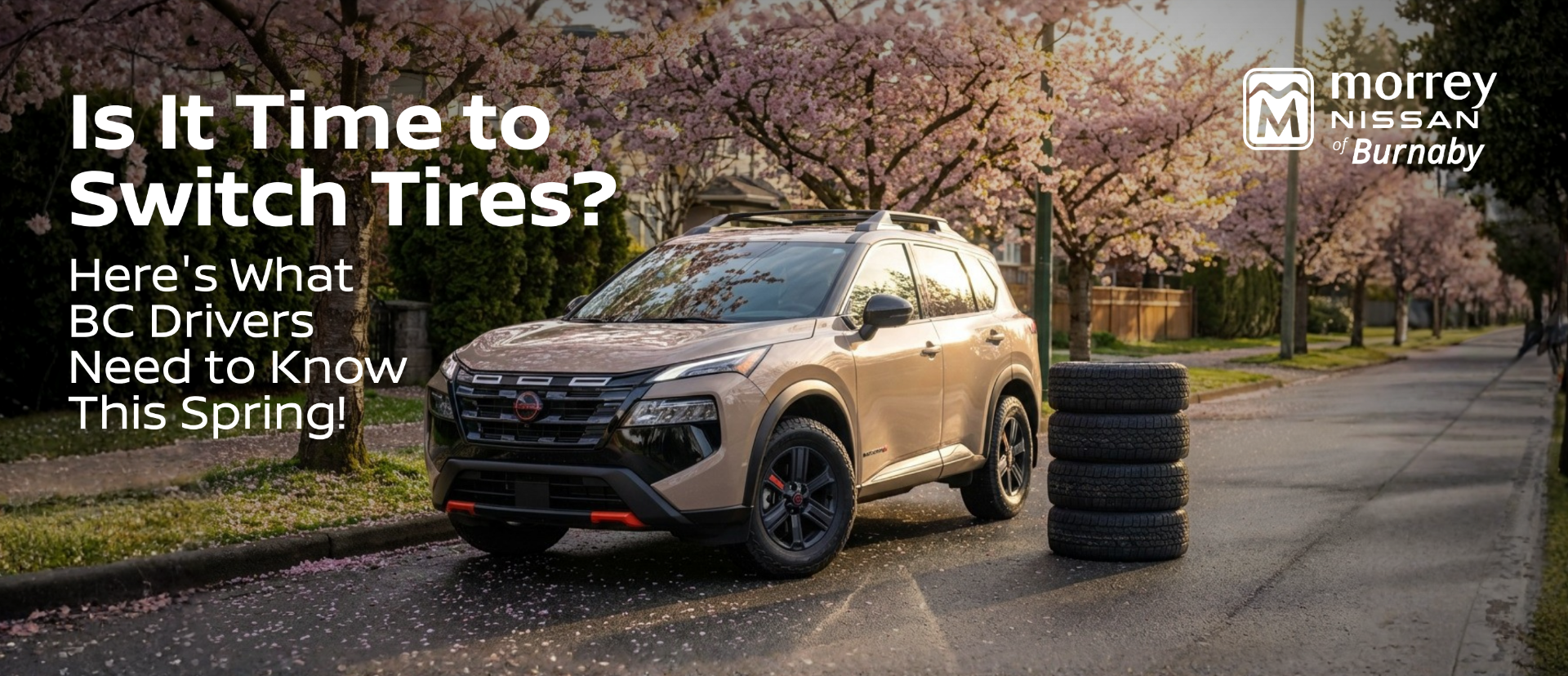
Most BC drivers run all-season tires in warmer months. The 2026 Nissan Rogue takes either 225/65R17 or 235/60R18, depending on the trim, so confirm your size before shopping. If your all-seasons have low tread or are several seasons old, replacing them now sets you up for the full driving year ahead.
Morrey Nissan of Burnaby's Spring Tire Event
Through June 30, Morrey Nissan of Burnaby is offering tires at dealer cost on any vehicle make and model, a mail-in rebate of up to $200, and a 24-month road hazard peace of mind warranty. The event runs from March 16 to June 30 and is valid with a four-tire replacement.
Book your service appointment and get your Rogue ready for the season.